Mirror blog :

Attention, for mirror blog please go here : https://europeancomicbandedesinee.blogspot.com/
Showing posts with label Claus D. Scholtz. Show all posts

Wednesday, June 22, 2016

Secret Space War

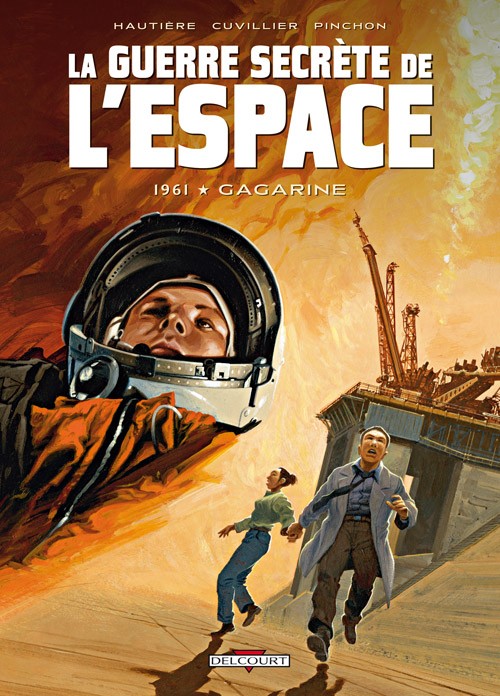
Faithful member of the Communist Party, Anatoly Nechayev has been assigned to the Baikonur Cosmodrome to supervise the installation of the first Russian intercontinental missile. Upon his arrival, he faced an icy reception. Tensions grew with the first failures of the base to the murder of an engineer who triggered a wave of suspicion a KGB agent is then dispatched. A comic by Regis Hautière and Damien Cuvillier. Secret Space War.
Baïkonour, 1957. In a few months the Soviet Union will celebrate the forty years of its revolution. To make an impression and show the Soviet superiority to the world, Khrushchev wants to "build the most terrifying weapon the world has ever known." The race against time and against the opponent is started, the space war began. First in a series of five albums, 1957 Sputnik inaugurated a new saga depicting the US-Russian competition for the conquest of space. The clash will be remote, far from the battlefields. All in all, in times of cold war, the fact that the protagonists are cut off from the world offers no guarantee. Especially as the danger and the enemy can be found within its ranks because of the rivalry born of stubborn hatred that some dedicate themselves. Documented as required by distilling technical and historical information accurately and without heaviness, the story of Regis Hautière therefore focuses on the events taking place in this vacuum.

Friday, November 20, 2015

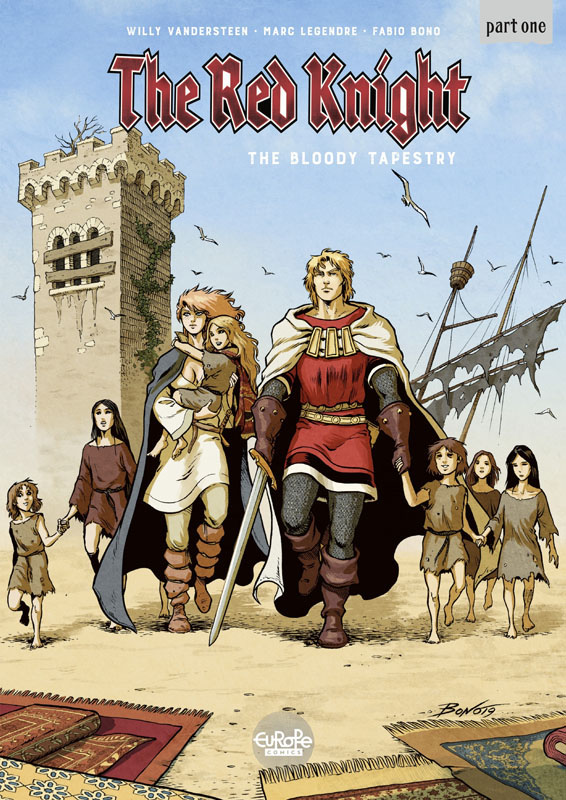
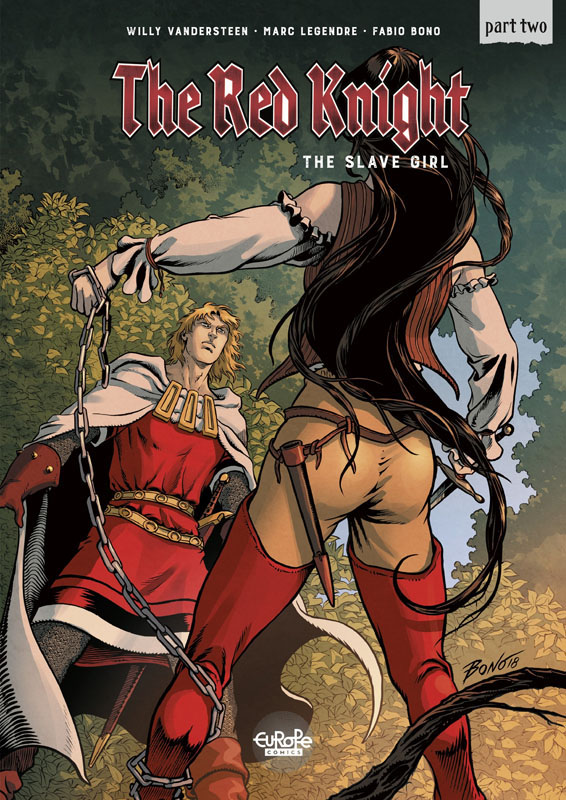
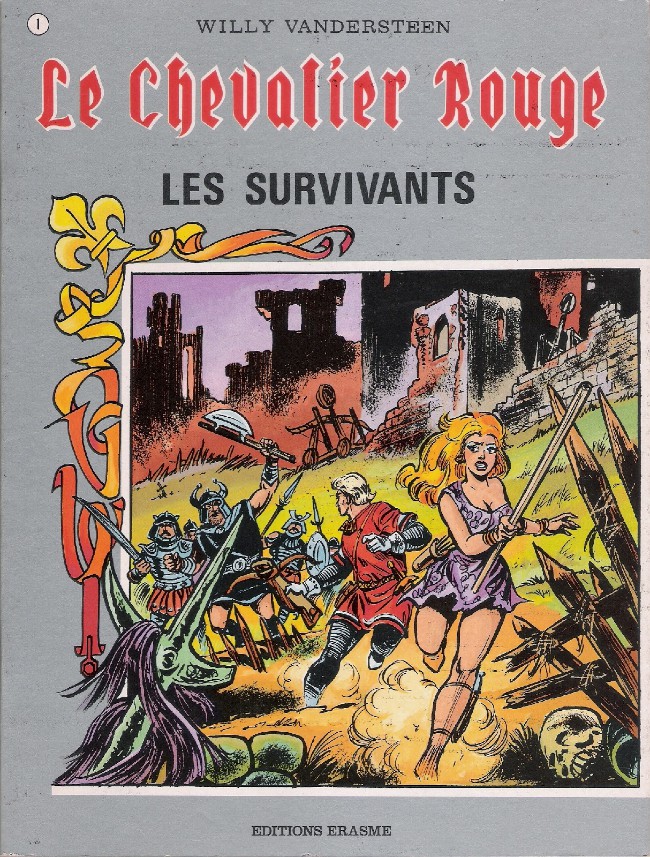
The Red Knight

Le Chevalier Rouge or De Rode Ridder or The Red Knight is a Belgian Flemish comic book series set in medieval Europe. It stars the titular character Johan, the Red Knight, easily recognizable by his red tunic. It appeared six days a week in the newspaper De Standaard and a few other ones. The series are characterized by subseries and stand alone albums (i.e. depicting a story which are not related to any other album as they do not impact the story line or are mentioned in other albums).
The first twelve albums give a general impression of the Johan. He mostly wanders around in medieval Flanders as a lonely noble knight. A common theme in these albums is the investigation of believed-to-be supernatural things and events. Johan investigates these things and comes to the conclusion that these are merely tricks, used to mislead and frighten people. In a few albums he travels around the world . A common theme of these albums is the fascination of Johan for exotic cultures and his strong opposition to slavery. The chronology of the events in the series do not fit the chronology of real world events. 
The Red Knight was originally conceived by Leopold Vermeiren as the main character in his short stories in 1946. Willy Vandersteen (most famous for his Spike and Suzy series), in cooperation with Leopold Vermeiren and Karel Verschuere, wrote the first comic in 1959. Verschuere was replaced with Frank Sels in 1963. Until Parcifal (album 43), Willy Vandersteen drew and wrote the story. In 1966 the comic was declining in popularity, and Willy Vandersteen considered ending it. The remaining fans protested, however, and it was decided to continue the comic, written by Karel Biddeloo, who took the comic less in the direction of 'knightly tales' and more in the direction of fantasy and science fiction and more action, much to the displeasure of Vandersteen. Still, the comic remained popular. In 2004, after the 206th album, Biddeloo died, and was replaced with the team of the Dutch writer Martin Lodewijk and the German artist Claus D. Scholtz. From the album De Grot van de Beer (The Cave of the Bear, album 207) onwards, the comic book is made by Claus Scholz (artist) and Martin Lodewijk (scenarist). The style of the series was completely revamped, mainly because the series obtained a more medieval character, and because Scholz has a different drawing style than Biddeloo. Martin Lodewijk wrote stories for De Rode Ridder until 2012, with album 235th being his last. While Martin Lodewijk left in 2012, Marc Legendre replaced Martin Lodewijk in 2013 as a new writer for De Rode Ridder. Marc Legendre made his debut with album 238, The Ordeal.