Mirror blog :

Attention, for mirror blog please go here : https://europeancomicbandedesinee.blogspot.com/
Showing posts with label André Franquin. Show all posts

Friday, August 9, 2019

Non Album Collections 179

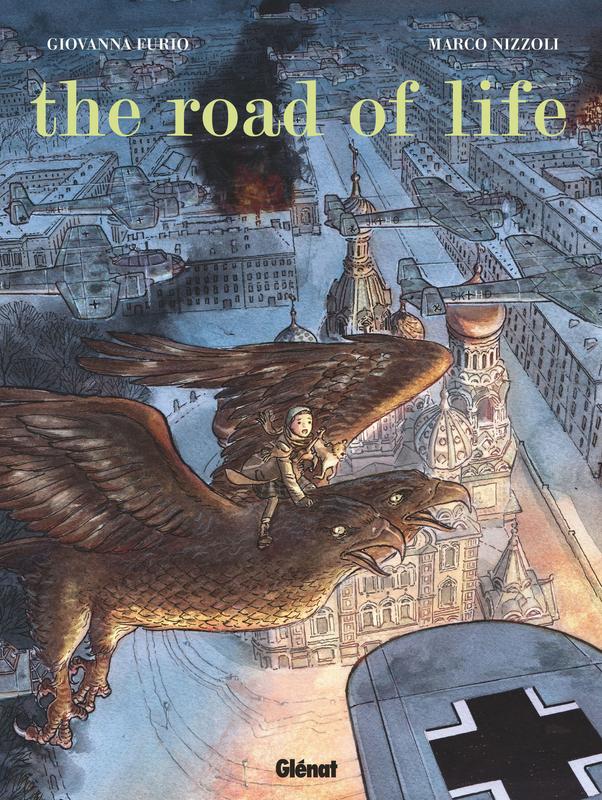
The Road of Life (2018)

USSR, 1941. Olenka's life changes when Nazi troops invade the Soviet Union and besiege the city of Leningrad. The eight-year-old girl loses her parents and brother and finds refuge in her ruined apartment. Now living alone with her dog, Olenka survives somehow to hunger and frost, and escapes by vibrating the strings of her violin. One day she meets in a dream a mysterious two-headed eagle who explains to her that the whole city is under the yoke of a curse. 

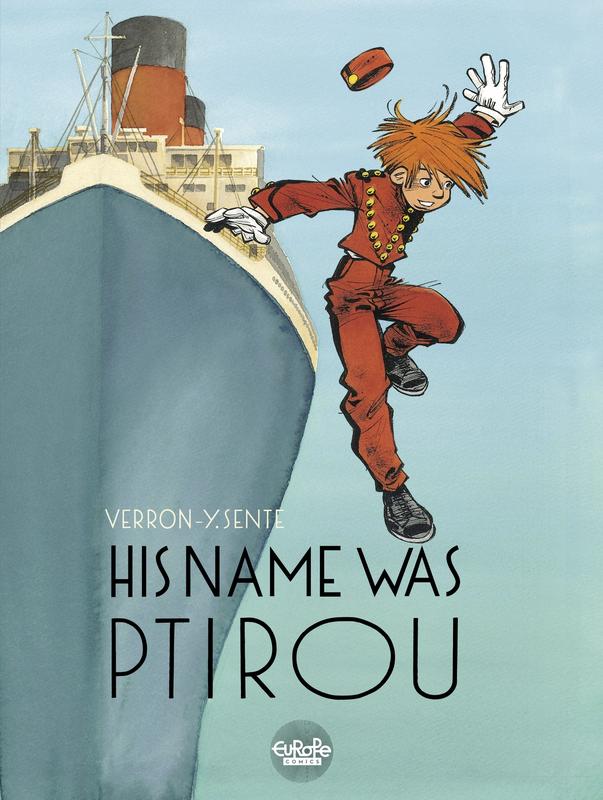
His Name Was Ptirou (2018)

Script by Yves Sente - Art by Laurent Verron. The best part of Christmas is getting to hear one of Uncle Paul’s stories. This year, Uncle Paul treats the kids—and us—to the story of the real-life boy who inspired the beloved Spirou. It’s 1929. Ptirou is a circus acrobat who, while the world’s economy is crashing, sees his own world fall apart. Orphaned, and possessing only his skill, a bottle of perfume, and an inherited dream, Ptirou sets out for New York and new adventures. With saboteurs on one side, the lovely Juliette on the other, and his own knack for mischief, Ptirou finds adventure aboard an ocean liner before it’s even left port.

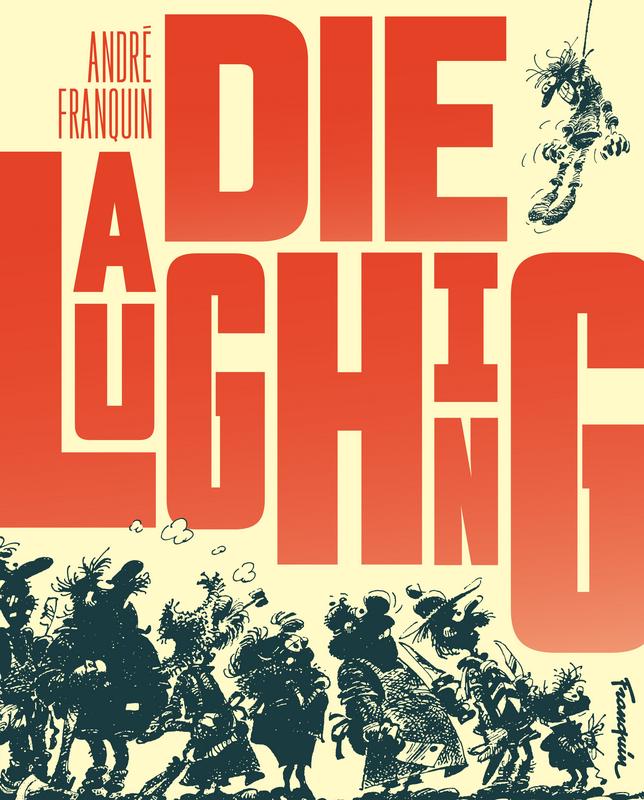
Die Laughing (2018)

This is a collection of darkly comic standalone strips by a cartoonist Herge (Tintin) idolized. Die Laughing, which is executed in stark black and white, takes aim at everyone and everything in its scathing critique of modern life, but is particularly ruthless toward animal abusers, the military industrial complex, and death penalty enthusiasts. Franquin’s loose but meticulous line work features expressionistic shadows and silhouettes that infuse his depressed, repressed, and oppressed characters with a disturbing manic energy. Die Laughing is filled with visual gags and gag-inducing visuals that will haunt you.
Saturday, July 8, 2017

Non Album Collection 12

Miss Don't Touch Me (2014) (Digital) (phillywilly-Empire)

In 1930s Paris, the “Butcher of the Dances” is on the prowl for young, loose women, and local dominatrix Agatha suddenly turns up dead. Everyone assumes it was suicide, but her sister Blanche is convinced that the Butcher is responsible. She decides to take matters into her own hands, and in her pursuit, she ends up hired into a luxury house of call-girls. She soon becomes adept at certain practices, but she does not lose sight of her ultimate goal—to find her sister's killer. A suspenseful spicy tale as only the French could so lightly get away with, this work is deceptive in its depth and realism.

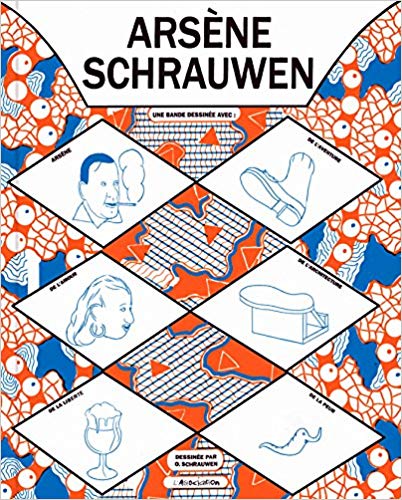
Arsene Schrauwen (2014)

In 1947, the author's grandfather, Arsene, traveled across the ocean to a mysterious, dangerous jungle colony at the behest of his cousin. Together they would build something deemed impossible: a utopia of modernity, in the wilderness — but not before Arsene falls in love with his cousin's wife, Marieke. Whether delirious from love or a fever-inducing jungle virus, Arsene's loosening grip on reality is mirrored by the reader's uncertainty of what is imagined or real by Arsene. This first full-length graphic novel from the critically-acclaimed Olivier Schrauwen is an engrossing, sometimes funny, slightly surreal and often beautiful narrative.

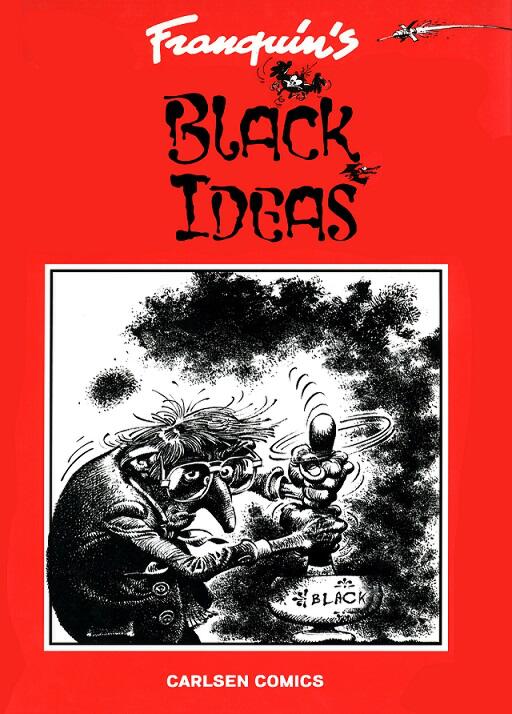
Franquins Black Ideas (2003)

Funy dark humor, from André Franquin (3 January 1924 – 5 January 1997) was an influential Belgian comics artist, whose best known comic strip creations are Gaston and Marsupilami, created while he worked on the Spirou et Fantasio comic strip from 1947 to 1969.

Thursday, July 21, 2016

Isabelle

Isabelle was a Belgian comic series drawn by Will and written by André Franquin, Delporte and Raymond Macherot. The comic first appeared in Spirou magazine in 1969. Created by a top team of already-famous contributors to the magazine, the series gained a small but fanatical following. The first stories were written by Franquin (of Gaston Lagaffe fame), Delporte (editor of Spirou and writer of many comics) and Macherot (creator of Sibylline). Later, Delporte alone wrote the stories in collaboration with Will. Twelve albums were published until the series ended with Will's death in 2000. 
The little girl Isabelle (named after Franquin's daughter) gets into a lot of adventures when the evil witch Kalendula troubles Isabelle's uncle Hermès and his fiancée, the good witch Calendula (who is the descendant of the evil Kalendula). Other stories are about a magical painting, a flying village or a floating island. The stories have a poetical tone, although mixed with tons of jokes and puns, rhyming ghosts, a talking diamond and Isabelle's down-to-earth aunt – whose greatest concern when Isabelle gets into an adventure is whether she's dressed warmly enough, even when she descends into Hades. The drawings are packed with details and the poetic nature of the stories comes through in the imaginative animals and backgrounds.


Saturday, November 7, 2015

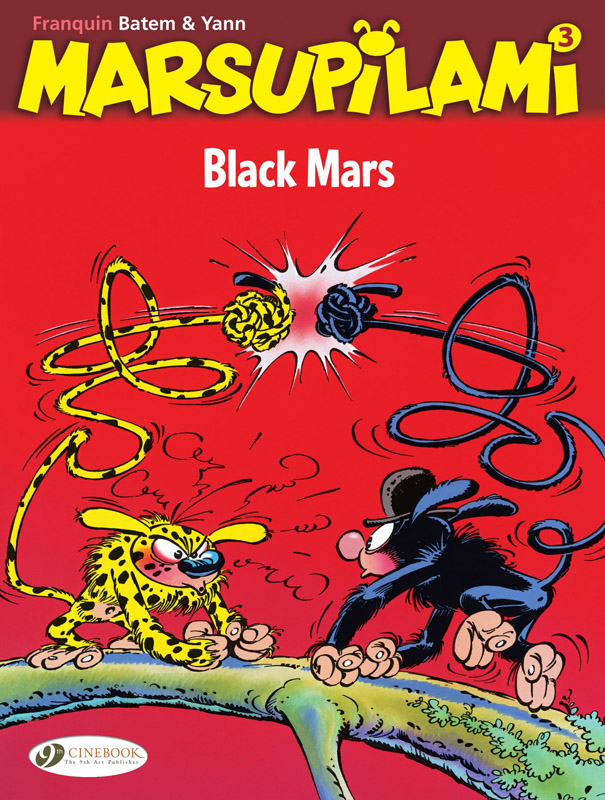
Marsupilami

Marsupilami is a fictional comic book species created by André Franquin, first published on 31 January 1952 in the Franco-Belgian comics magazine Spirou. Since then it appeared regularly in the popular Belgian comic book series Spirou et Fantasio until Franquin stopped working on the series in 1968 and the character dropped out soon afterward. In the late 1980s, the Marsupilami got its own successful spin-off series of comic albums, Marsupilami, written by Greg, Yann and Dugomier and drawn by Batem, launching the publishing house Marsu Productions. Later, two animated shows featuring this character, as well as a Sega Genesis video game and a variety of other merchandise followed. The asteroid 98494 Marsupilami is named in its honour. The name is a portmanteau of the words marsupial, Pilou-Pilou (the French name for Eugene the Jeep, a character Franquin loved as a kid) and ami, French for friend.
Marsupilami's adventures had been translated to several languages, like Dutch, German, Greek, Spanish, Portuguese and several Scandinavian languages. More than three million albums of the Marsupilami series are claimed to have been sold by Marsu Productions.
One album of Spirou and Fantasio featuring Marsupilami, number 15, was translated to English by Fantasy Flight Publishing in 1995, although it is currently out of print. Plans on releasing number 16 ended halfway through the translation process, due to bad sales. In 2007, Egmont's subsidiary Euro Books translated albums number 4, 5, 7, 8, 9, 10, 11 and 14 for the Indian market.
In 2013, Dupuis bought Marsu Productions and its characters, thereby allowing a new production of Spirou and Fantasio adventures including Marsupilami.


Wednesday, October 28, 2015

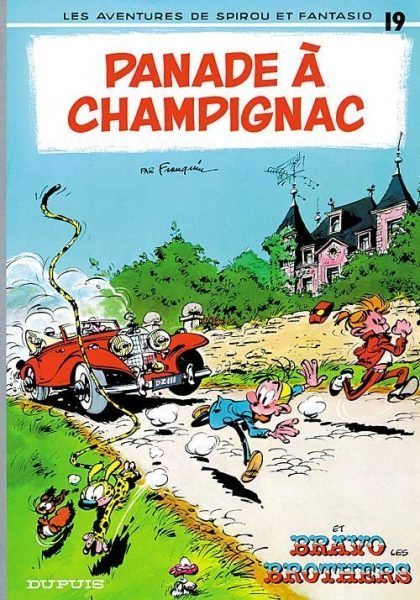
Spirou and Fantasio

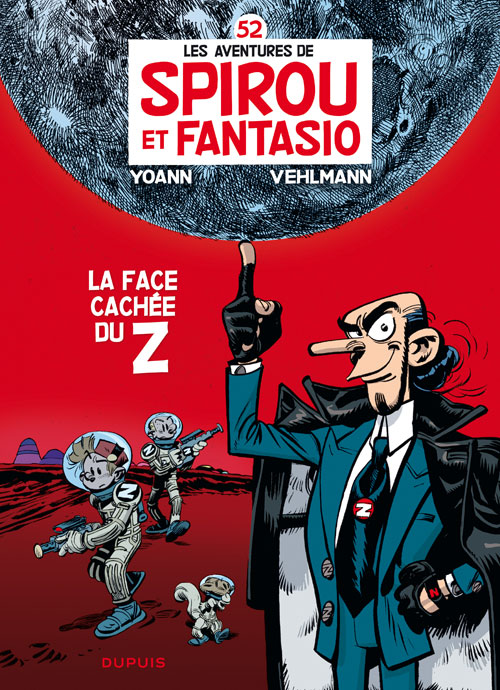
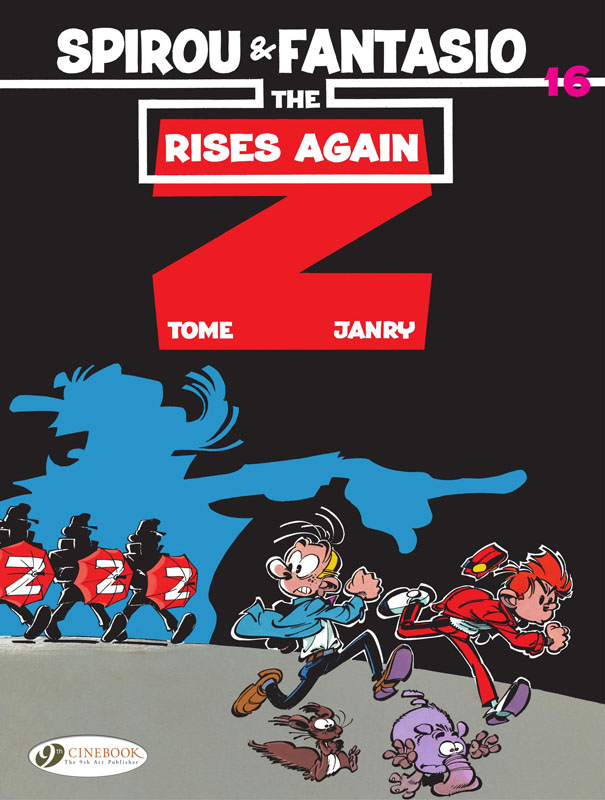
Spirou et Fantasio (Spirou and Fantasio) is one of the most popular classic Franco-Belgian comics. The series, which has been running since 1938, shares many characteristics with other European humorous adventure comics like The Adventures of Tintin and Asterix. It has been written and drawn by a succession of artists. Drawing: Fournier - Franquin - Janry - Munuera - Nic - Roba - Yoann. Scenario: Cauvin - Fournier - Franquin - GREG - Morvan - Tome - Vehlmann - Yann.
Spirou and Fantasio are the series' main characters, two adventurous journalists who run into fantastic adventures, aided by Spirou's pet squirrel Spip and their inventor friend the Count of Champignac. If he kept his origins a striking red coat bellboy Spirou is an adventurer. Always accompanied by his friend Fantasio and Spip, his favorite squirrel, Spirou fight villains of all kinds around the world. Thus he will fight against the terrible evil scientist Zorglub or pirate John Helena, he will face Italian mafia and Chinese triads in New York or he'll break in Palombia the secret of a mythical animal: the Marsupilami. 


Tuesday, October 13, 2015

Gaston

Gaston is a gag-a-day comic strip created in 1957 by the Belgian cartoonist André Franquin in the Franco-Belgian comics magazine Spirou
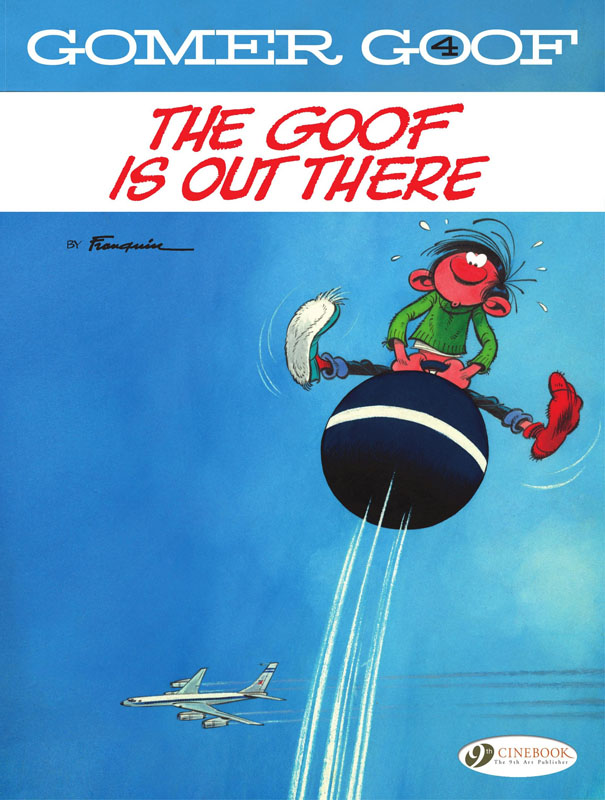
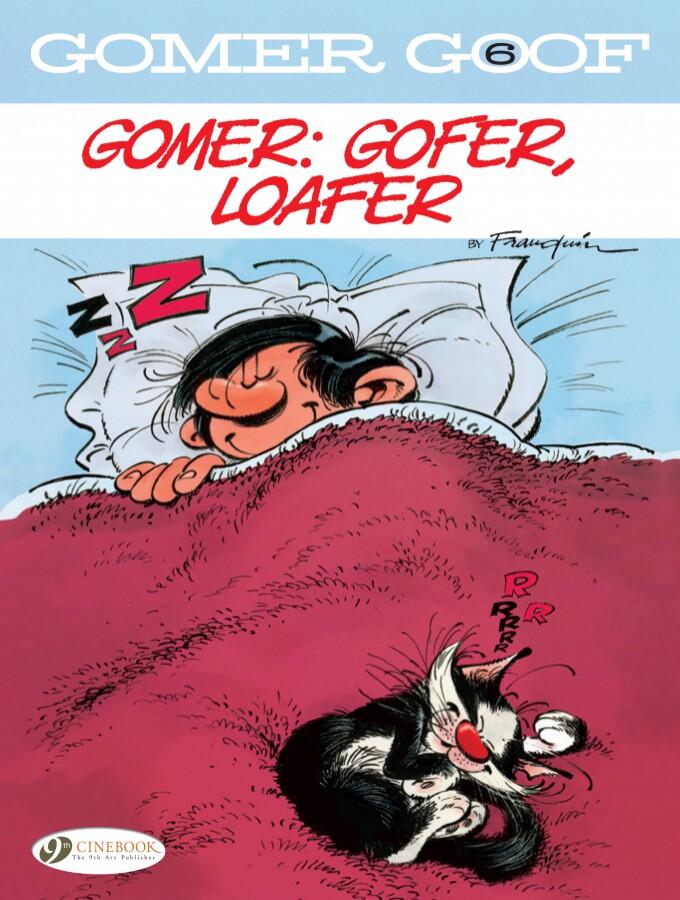
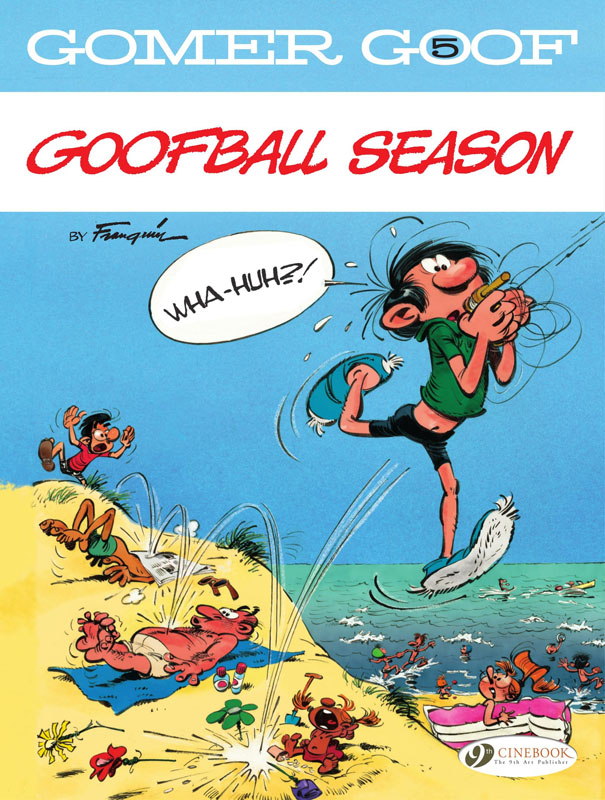
The series focuses on the everyday life of Gaston Lagaffe (whose surname means "the blunder"), a lazy and accident-prone office junior. Gaston is very popular in large parts of Europe (especially in Belgium and France) and has been translated in over a dozen languages, but except for a few pages by Fantagraphics in the early 1990s (as Gomer Goof), there is no published English translation.