Mirror blog :

Attention, for mirror blog please go here : https://europeancomicbandedesinee.blogspot.com/
Showing posts with label greg. Show all posts

Saturday, February 6, 2016

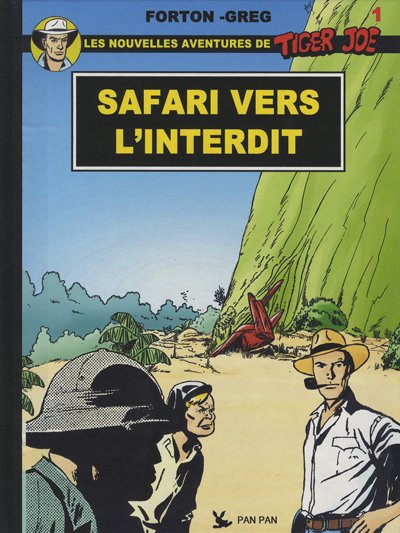
Tiger Joe

Tiger Joe is a series of comics published the first time in 1950 in La Libre Belgique. Scenario: Charlier, Greg. Drawings: Hubinon, Forton, Pleyers. When the first pages appeared in La Libre Belgique in 1950 the country is still a colonial power since the Congo is attached to the flat country since 1908 after personal possession of the King of the Belgians. To this should be added since the end of World War I the Rwanda and Burundi German former colonies. Although the country is never mentioned by name, the first thumbnail indicates that the action is on the course of the tributaries of the Uele, which flows into the Ubangi which finally joins the river Congo. Furthermore it is also alluded to the locality of Mbura (2 e board) which would be located near the Lake Albert in the north-east. The writer gives other geographical indications including Blue Mountains (Plate 7). All this is coherent, particularly at the time, difficult to access. In short, the action takes place in a geographic area where the author can give free rein to his imagination without being (too) denied by the facts.
In creating this band Charlier adventures reproduces stereotypes which then during which the famous mysterious and wild Africa as envisioned by popular novels and films of the time. In this enthusiasm good child, he named his hero Tiger Joe, an experienced hunter who wanders from wealthy Europeans in search of thrills. Only problem there are no tigers in Africa and it is not clear therefore how the hero could have earned that nickname. By taking the series in the late 50 years Greg will not fool it by situating it in the Indian peninsula. Creating Hubinon Charlier and now includes 3 stories but in two cycles. For reasons albums published the first cycle has been split into two volumes of 45 pages each and is focused on finding the legendary elephant graveyard. Except Sheila Keeler, the last episode uses the same characters for an adventure of 46 boards. Note that Charlier will resume the principle of creating these exotic adventures shortly after for Spirou's character Kim Devil, this time the action is transposed in the Amazon. Gérald Forton will be the designer of this short series is also he who will resume following the adventures of Joe Tiger in 1958 on scenarios of Greg.

Sunday, January 17, 2016

Cobalt

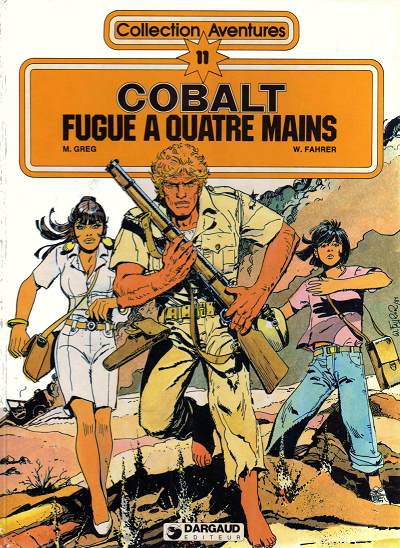
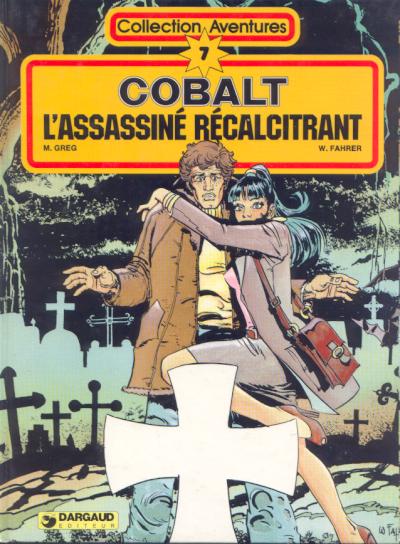
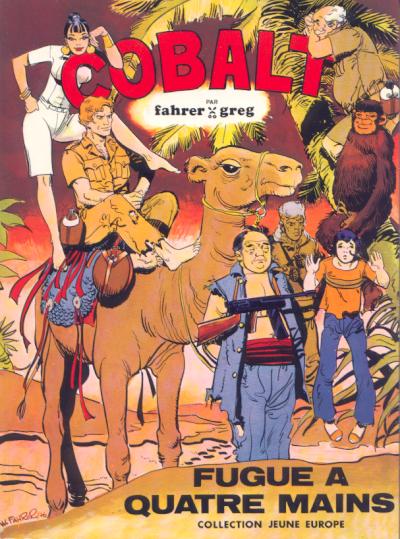
Cobalt is a series of comics written by Greg and designed by Walter Fahrer, published for the first time in 1971 in the Tintin magazine. Cobalt and Paprika Assistant conduct investigations worldwide to find missing people. A short history [Cobalt, tooth and nail (8 pages)] and 4 long stories [Fugue for four hands (45 pages), The Treasure of the cobra (30 pages) The assassinated recalcitrant (30 pages) and the wonderful zombie ( 30 pages)] were published between 1971 and 1975 in the Tintin magazine. 
Characters:
  • Robert Cobalt: He calls himself "Intelligent, virile and sober deserve a substantial increase.."
  • Paprika: Cobalt Assistant. "Her luscious mouth serves only lead to his stomach and when it is not full, on utter nonsense." Said Cobalt.
  • Dabel: Patron of the "Service Missing Persons" where Cobalt works. "He has strong breath. When we worked for him, we can ALL face." Said Cobalt.

Saturday, November 7, 2015

Marsupilami

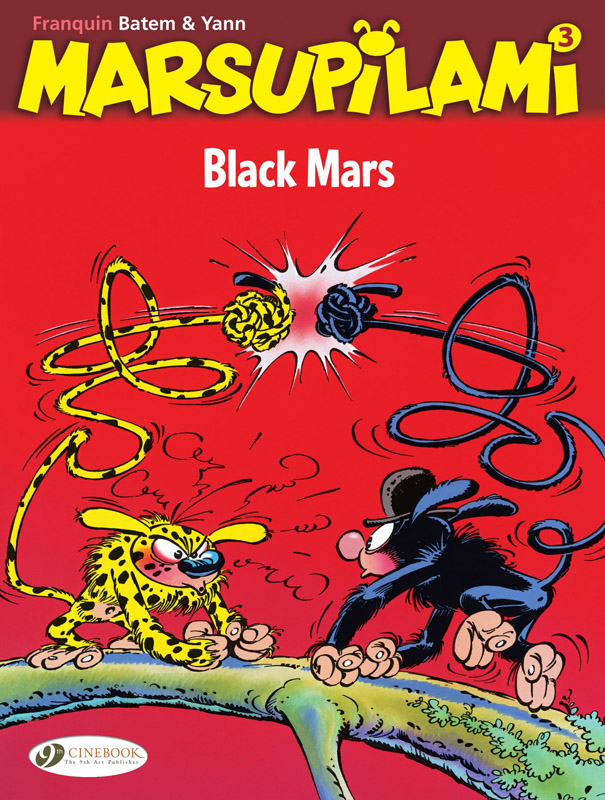
Marsupilami is a fictional comic book species created by André Franquin, first published on 31 January 1952 in the Franco-Belgian comics magazine Spirou. Since then it appeared regularly in the popular Belgian comic book series Spirou et Fantasio until Franquin stopped working on the series in 1968 and the character dropped out soon afterward. In the late 1980s, the Marsupilami got its own successful spin-off series of comic albums, Marsupilami, written by Greg, Yann and Dugomier and drawn by Batem, launching the publishing house Marsu Productions. Later, two animated shows featuring this character, as well as a Sega Genesis video game and a variety of other merchandise followed. The asteroid 98494 Marsupilami is named in its honour. The name is a portmanteau of the words marsupial, Pilou-Pilou (the French name for Eugene the Jeep, a character Franquin loved as a kid) and ami, French for friend.
Marsupilami's adventures had been translated to several languages, like Dutch, German, Greek, Spanish, Portuguese and several Scandinavian languages. More than three million albums of the Marsupilami series are claimed to have been sold by Marsu Productions.
One album of Spirou and Fantasio featuring Marsupilami, number 15, was translated to English by Fantasy Flight Publishing in 1995, although it is currently out of print. Plans on releasing number 16 ended halfway through the translation process, due to bad sales. In 2007, Egmont's subsidiary Euro Books translated albums number 4, 5, 7, 8, 9, 10, 11 and 14 for the Indian market.
In 2013, Dupuis bought Marsu Productions and its characters, thereby allowing a new production of Spirou and Fantasio adventures including Marsupilami.


Wednesday, October 28, 2015

Spirou and Fantasio

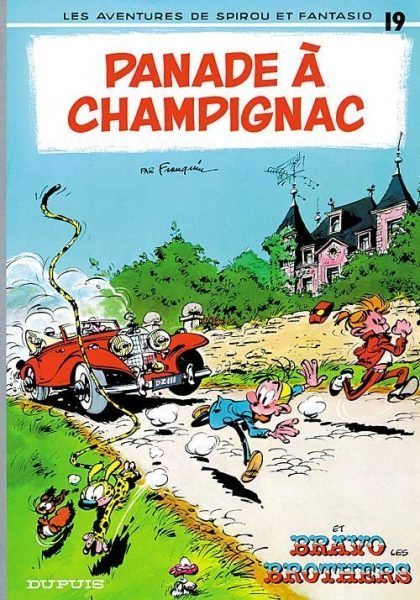
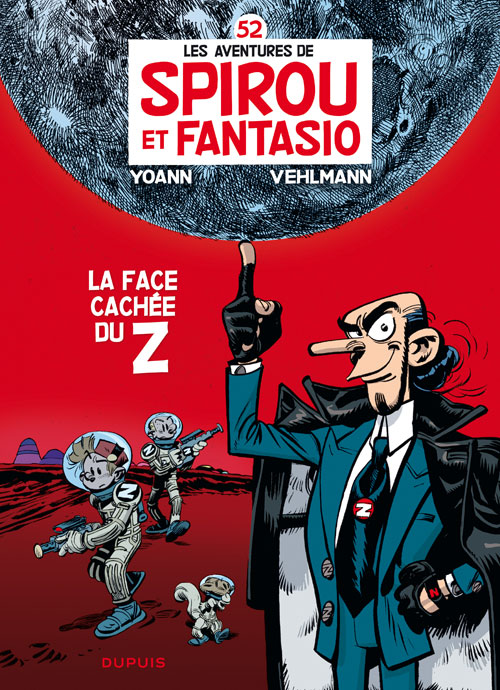
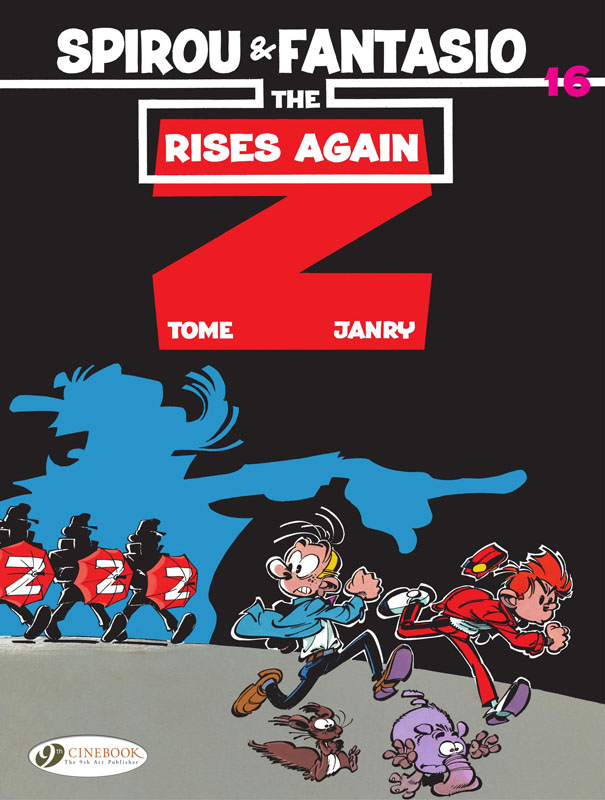
Spirou et Fantasio (Spirou and Fantasio) is one of the most popular classic Franco-Belgian comics. The series, which has been running since 1938, shares many characteristics with other European humorous adventure comics like The Adventures of Tintin and Asterix. It has been written and drawn by a succession of artists. Drawing: Fournier - Franquin - Janry - Munuera - Nic - Roba - Yoann. Scenario: Cauvin - Fournier - Franquin - GREG - Morvan - Tome - Vehlmann - Yann.
Spirou and Fantasio are the series' main characters, two adventurous journalists who run into fantastic adventures, aided by Spirou's pet squirrel Spip and their inventor friend the Count of Champignac. If he kept his origins a striking red coat bellboy Spirou is an adventurer. Always accompanied by his friend Fantasio and Spip, his favorite squirrel, Spirou fight villains of all kinds around the world. Thus he will fight against the terrible evil scientist Zorglub or pirate John Helena, he will face Italian mafia and Chinese triads in New York or he'll break in Palombia the secret of a mythical animal: the Marsupilami. 


Monday, October 19, 2015

Line

Line is the heroine namesake of a series of comics created by Nicolas Goujon and Françoise Bertier and developed by Paul Cuvelier, illustrating the adventures of a young adolescent. Weekly Line, the girls chic log is a magazine published by Le Lombard and Dargaud between 1955 and 1963. This is the female counterpart of the Journal of Tintin. In 1956 the editor, a heroine who seeks to embody the magazine had already published Line adventures but not comics. Nicolas Goujon is the first writer of Line, designed by Françoise Bertier. It is then brown and appears in children's stories but only lasts a few numbers. Resumed in 1958 by Charles Nague (screenplay) and Andrew Gaudelette aka André Joy (drawing), making it a more youthful figure and blonde, with no more success. In 1960, Rol who draws and writes a new Line. From 1962 Paul Cuvelier draws the adventures of the teenage blonde on scenarios of Greg; the series finally found its audience. After stopping the publication of the namesake magazine (May 1963), following line appears in Tintin in several episodes staggered from 1964 to 1971.
Line is very young and brown, with a simple graphic for a child audience. There after it is rejuvenated and transformed into a blonde girl.
Line is a sentimental young girl, lively, brave and generous, who has a good knowledge of first aid, loves to meddle in what does not concern her, willingly puts "the foot in it" and flies to the rescue of his neighbor. His adventures mingled with intimacy particularly affect young teenage romantic. Cuvelier version is older, more forms, and Greg scenarios are more consistent. The design has evolved to a more living form, more colorful.


Saturday, October 17, 2015

Comanche

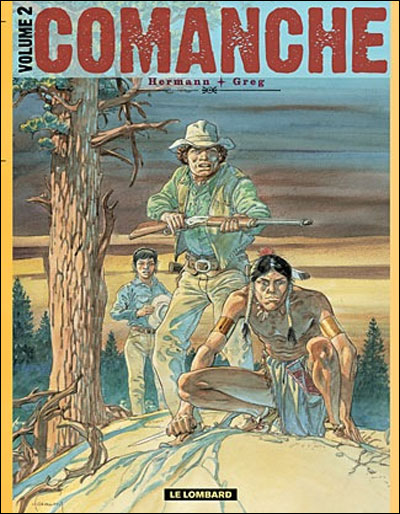
Comanche is a series of comic strip created by Greg (script) and Hermann (drawing) for the Journal of Tintin in December 1969. It was published in the album Lombard editions from 1972.
After the abandonment of the series by Hermann, who wished to devote himself to Jeremiah, drawing was echoed by Michel Rouge from Volume 11, and the screenplay by Rodolphe in Volume 15. The Comanche series retains its original spirit with the tandem creator until Volume 10. It then moves from the volume 11. Volume 15 is the last of the series.
Comanche is a young landowner from Wyoming. With the old Ten Gallons, she painfully survive the 666 ranch that his father left him. One day, out of nowhere, appeared a Red Dust. Captivated by the quiet force of this unknown, Comanche assigned by the foreman. To face adversity and covetousness, it recruits members. Their true personality become clearer over the turbulent episodes of this western that takes place in xix th century.

Tuesday, October 13, 2015

Luc Orient

Luc Orient is a Belgian science fiction comic series featuring an eponymous hero, created in 1967 by the writer Greg and the artist Eddy Paape. It belongs to the large family of Franco-Belgian comics.
Luc Orient was originally serialized in the weekly Tintin magazine starting on January 7, 1967. It was one of the several series simultaneously launched by then-editor Greg to give the magazine a needed facelift. Luc Orient's adventures were then collected as a series of graphic novels by Éditions du Lombard, starting in 1969.
The series continued regularly with one or two volumes per year until episode 13, L'enclume de la foudre was released in 1978. After Tintin ceased publication in 1978 (following several name changes), the later episodes were released sporadically.The series was to be reprinted in an omnibus edition, two volumes in one, by Pictoris Studio, under the title L'intégrale de Luc Orient; but only three tomes (i.e. the first six volumes) ever appeared, between 1998 and 1999.
Luc Orient, professor Hugo Kala from Eurocristal laboratory and his secretary Lora, share several adventures involving aliens and scientific mysteries. At the beginning, the trio discovers a stranded spaceship with a hibernating alien crew; professor Kala's arrival brings hope to the refugees from the planet Terango (Episodes 1-2). They then travel to Terango to thwart the evil tyrant Sectan who plots to invade Earth (Episodes 3-5). Subsequent adventures involve a series of scientific mysteries. Luc and Lora even acquire temporary superpowers in Episode 6.

Tuesday, October 6, 2015

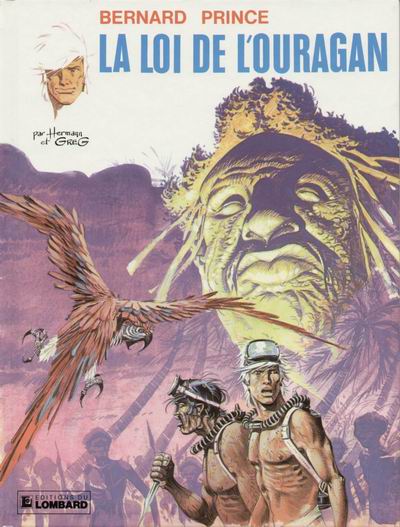
Bernard Prince

Bernard Prince (or Andy Morgan in German) is a Franco-Belgian comics series, featuring an eponymous character and his sailor-adventurer companions. The series was created by Belgian cartoonists Greg and Hermann for the Franco-Belgian comics magazine Tintin, first appearing on January 4, 1966.
Originally an agent of Interpol the heroic Prince, joined by the roguish Barney Jordan and the clever orphan Djinn, becomes an adventurer sailing through the contemporary (1960s-70s) world on a sloop, the beautiful Cormoran.

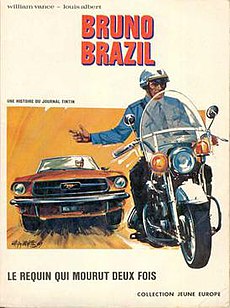
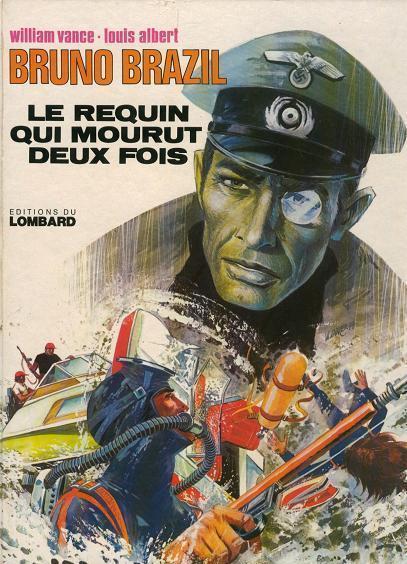
Bruno Brazil

Bruno Brazil is a Franco-Belgian comics series written by Greg, under the pseudonym Louis Albert, and drawn by William Vance. It was initially serialised in the Franco-Belgian comics magazine Tintin, first appearing on January 17, 1967. The first album publication was in 1969, while the latest album was first published in 1995.
Bruno Brazil is the leader of a small, elite combat unit of the American secret service, the "Cayman Command", of which each member has some special skills. Together they fight crime and exotic threats. The series is notable for not avoiding casualties among the Cayman Command.